Showing posts with label quiz results. Show all posts

Tuesday, June 10, 2008

Yes, that's me. So?

Your Score: The Eccentric

You scored 35Artist, 45 Philosopher, 20 Scientist!

You live in a world of vast abstraction and color. You are hardly interested in the mechanics of real life; you are preoccupied with the substance of existence (the story and narrative, the symbolism), and the form and shape which life itself takes. You mix the mystical with the rational, like St. Thomas Aquinas, you find inroads between the sublime and the tangible ... you might have a propensity to let yourself go, though, in different ways. Everyday chores and responsibilities are not high on your list of passions; neither is any kind of "daily ritual" most likely. Your ideal work involves something that combines a medium for self expression (such as writing), with the inherent rationality and inquisitiveness of your philosophical side. You are very youthful in your demeanor. You are a true representative of modern culture and society; with its shifts toward new systems of spirituality which combine ancient mysticism with classic reason. You are not preoccupied with wealth most likely. Examples of Eccentrics: Timothy Leary, Stanley Kubrick, Socrates. Quotes from "Eccentrics": "I am a little unusual, a little different and very unique."

Link: The Tri-Variable Personality Test (qualified psychologist) ... Test written by divncom on OkCupid, home of the The Dating Persona Test
View My Profile(divncom)

Tuesday, April 10, 2007

Geekiness confirmed

i am a major geek

With 36% geekiness. Then again, I am the one who went to the Pop Culture/American Culture Association's meeting not to present but to hear other people talk about scifi and anime by using literary theory.

Some of my answers embarassed me. Oh dear.

Monday, March 26, 2007

The cold days have eclipsed

Lent
The cold days have eclipsed at last and the God who Is strikes down Ra just for me. The inevitable brightness of days is upon us, illuminating so I can't see. Each face turned skyward, leeward at the rain, looks like his in the glaring grey of March. Warm eternal twilight holds itself close to the buildings, to the humming machines, to the swiftly failing people. The lion lays down with the lamb and the waters are not divided, the light has not escaped the dark (the dark has not fled the light), the land has not emerged from the sea. All the creatures creeping along the ground have paused: will the earth give birth again this April?

There is a pleasure of the text in dystopias: To revel in the spectacle of degeneracy and say, "And I thought my life was bad."


You scored as Babylon 5 (Babylon 5). The universe is erupting into war and your government picks the wrong side. How much worse could things get? It doesn’t matter, because no matter what you have your friends and you’ll do the right thing. In the end that will be all that matters. Now if only the Psi Cops would leave you alone.


From quizfarm.com

Monday, December 11, 2006

Quiz fun

Oh, and online quizzes also do not suck.
Your results:
You are Daniel Jackson


Daniel Jackson
92%
Thor
70%
Jack O'Neill
65%
Dr. Frasier
60%
Samantha Carter
45%
Teal'c
20%
General Hammond
20%
A Goa'uld
10%
You are sensitive to the needs of
others and are a good communicator.
You always stand up for the little guy.


Click here to take the Stargate SG-1 Personality Quiz


Right. I think we all saw that coming. Of course, that was Pre-Ascension Daniel. Post-Ascension Daniel is way less nerdy.

Your results:
You are Jean-Luc Picard


Jean-Luc Picard
65%
Will Riker
60%
Deanna Troi
60%
James T. Kirk (Captain)
50%
An Expendable Character (Redshirt)
50%
Spock
40%
Geordi LaForge
40%
Chekov
25%
Beverly Crusher
25%
Leonard McCoy (Bones)
20%
Mr. Scott
20%
Uhura
20%
Data
10%
Worf
10%
Mr. Sulu
0%
A lover of Shakespeare and other
fine literature. You have a decisive mind
and a firm hand in dealing with others.


Click here to take the Star Trek Personality Quiz


Yes. That's me. An old bald white guy. Right.

Your results:
You are Spider-Man


Spider-Man
85%
Superman
70%
Green Lantern
70%
Supergirl
55%
Batman
50%
Hulk
50%
Catwoman
50%
Wonder Woman
35%
Robin
35%
The Flash
20%
Iron Man
20%
You are intelligent, witty,
a bit geeky and have great
power and responsibility.


Click here to take the "Which Superhero am I?" quiz...


Again, I rate as "dude." Should I be worried? Perhaps it's time to get out a skirt and shout "I'm a GIRL" again?

Sunday, January 22, 2006

Chili's, sushi, and "love" in the English department

Last year Anna said there was no love in our English department at Northeastern. I vowed that the next place I settled (as close as I ever get to "settled") would have love. With, like, people and everything.
Alors, c'est vrai.
Next weekend is Fun with Sushi. mmmmmmmm Raw FISH.
I suppose I should start in on my reading. Derrida is kicking my absent/present ass. If writing's goal is to make us absent enough to ourselves so that we can represent ourselves, then....something about the internet and the "presence" indicated by avatars, "instant" messaging, and the less present world of cyberspace text goes here. Can we say internet writing is different (differAnt?) simply because it purports to be less present (space) and more present (time)? Or does that not matter because writing in books or on paper is equally ephemeral: it can be burned, or lost or fade?
Is all self representation a type of absence? And aren't we always representing ourselves? (A self? A "selph," as Burke would say?) So even when I go out to Chili's with my friends, am I not absent to myself? Perhaps that's what we like. Too much presence is a bad thing. Madeline L'Engle wrote that most humans can't handle too much reality. Real reality would fry us.
Fry....mmmmmm eggs.

Your Hair Should Be Purple

Intense, thoughtful, and unconventional.
You're always philosophizing and inspiring others with your insights.


Cool. Now I know what to buy for next weekend.

You Are Japanese Food

Strange yet delicious.
Contrary to popular belief, you're not always eaten raw.


Duh.


Your Hidden Talent

You have the natural talent of rocking the boat, thwarting the system.
And while this may not seem big, it can be.
It's people like you who serve as the catalysts to major cultural changes.
You're just a bit behind the scenes, so no one really notices.


Right. So this fabulous dissertation I'm going to write on rhetoric and subversive/dystopian fiction...that's going to be my contribution. Woo. Hoo.
I need to go protest something somewhere.

Tuesday, January 17, 2006

Blogthings--Amy's post Derrida fun

      I hadn't intended on reading this much Derrida...EVER. Not that I hate Derrida, as some do. I find his ideas...sparky. Little flashes of light behind my eyes. I latch onto the singular moments I understand. Then I go back, and reread and reread. Reading Derrida requires enacting his ideas--recognizing that writing allows us to return, to re-mark, re-iterate. And one MUST return to writing, or it is not real writing; if something is perfectly clear, one cannot call it "writing"--there is no need. All writing, then, attempts to reveal even as it conceals. Literature is "literature" because it illuminates this relationship.
     It also illumniates the relationship of general to specific, of genre to member of genre--whole to part. It points out its own conventions and the necessity of those conventions; otherwise, we would not be able to read the text. But the conventions are repetitions for which there is no original; there is no "ubertext" which taught us all how to read a certain genre. As much as we want to call 1984 the prototype dystopia, it is only one member of a group, which we can only recognize as a group and not singularly. We could not, that is, have "learned" to read a genre from some original text--because we never would have been able to read that text in the first place. Therefore, to call Pamela the first "novel" is a ridiculous distinction; there is no first novel; they are all copies (with, of course, slight variations) of some other structure. No novel is entirely within the "novel" genre, either. There is no pure example of a genre, only hybrids; our social relations encourage us to name these as genre members, for ease of discussion.
     Where does that leave Miller, then? Miller says we recognize genres based on their actions. This does not seem contrary to Derrida, more like a supplement (if I am allowed to use that word in such a way). If Derrida (and Burke! They overlap so much!) wants to say that there is no pure genre, Miller will take the more pragmatic (BURKE) angle, by asking us to consider the fact that we do name genres, despite their impurities (Burke says that purity is barely possible, and if it is possible, is a destruction of essence). How can we do so, with so many "constellations" of forms shifting and changing? What is a good way to talk about these things that we use, but cannot define an essence of? Like Burke, (and lots of other rhetoricians), Miller points to the effect; like the wind, which we cannot see, genres are not quite visible to us except by what they do. It's the doing that matters here, not the essence, or our overall Western inability to discuss essence and being. We still must act.
     The dystopian (topian?) novel is a hybrid genre. If it were merely a "novel" we would call it so; however, we feel the need to include that adjective, to point to a difference. How is it different? What is the social action that changes? It is, at least, more subversive than the "regular" novel (although I would argue that as a genre, novels are fairly subversive in themselves). But Burke said that most revolutionary rhetoric is conservative...is dystopian fiction conservative? I want to say no, because of how 1984 came to me, how it came to symbolize everything that Hum and Monty and (oh god) Derek were doing in their little punky universe in high school. How Marx inflitrated our (their?)attempts to break the hegemony of Ashland so unsuccessfully that it just about drove them mad. And Orwell, to me, seemed to be describing the extremes of what I was seeing; total control, absolute hegemony, the need to hide subversion underground. The feeling of being in "lock down." Reading Orwell was a subversion; he wanted the text to be revolutionary--that much you can feel--and even if it did turn out to be, as Burke predicts, conservative, the act of reading something known as revolutionary is itself a subversion. I'm not saying this well. It doesn't matter what actions 1984 leads to in this case; it's the act of reading that is subversive, that is a change in attitude. Even if the resulting actions only maintain the current status quo, they are still revolutionary.
     Pamela on the other hand, or other novels, do not have this same call to action within them. They may lead to action due to the representative anecdote, and reading them may be seen as subversive (not really any more, but in the 18th century it was), but the novels do not call attention to the social situation in the same way. The defamiliarizing aspects that "science fiction" is defined by allow for a social transformation rhetoric. This defamiliarization, this hidden-yet-obvious commentary on the dangers of the present is what makes the adjective "dystopian" necessary.
     Is Moll Flanders subversive? Yes and no. As Burke says, that which seems subversive is often actually conservative. This is why the ending matters (entelechy!); if Moll had been caught and punished for "real," the subversion would have failed. The representative anecdote would tell us that "even if theiving and other non-social activities are fun for awhile and lead to good things, there is eventually a consequence. Do not desire this life, young ladies, for Moll only ends up in a bad situation." That Moll escapes and lives without consequences means that the representative anecdote is exactly as DeFoe states in his thesis: Sometimes you have to steal to make a living. Society sucks; there is no choice. Good job, DeFoe!
     However, we must look not only at the representative anecdote, but how the text is actually read--there may be an "obvious" anecdote for us, but for the original readers (and later readers...) a different "moral" may appear. The fact that Moll was so popular makes me immediately question its subversive abilities: If attitudes were indeed changed (if the Pentad shifted due to the Act of reading), and there were so many attitudes to be changed, why was there no middle class uprising? Why did young ladies not take to theiving? The critics of the day feared this outcome, but it did not happen. Why not? What prevents someone from acting on the (proposed) attitude change?
     Why do violent video games not lead to violent children?
     Here is the question of rhetoric. To be effective, one must have a very tight mimesis, a strong mimetic desire, the desire for complete identification. You must lose yourself and become the speaking/writing Other for there to be a resulting Act. What Moll failed to do, and what video games fail to do for most children/teens is create this identification. While I am engrossed in the action of Moll (wheee theiving), I am not able to identify with her, due to the time and context change. Her own readers were not themselves in her condition (or they couldn't have afforded the novel)--a revealed/concealed distance is present, one rhetoricians are always trying to overcome.
     It is the problem of communication in general: We cannot speak as the angels. Angels have perfect communication, no trace, no reiteration, no remarking. No doubt. Lucky angels. We, however, always have the problem of the Other, who we want to be like, who we can imitate, but never become so wholly as to (commune)icate.
     This is where Gerald would say something about Christianity--where he has said something about Christianity. What did Jesus do that we could not? As the Son of the Logos, he was able to become part of us completely, and yet remain human enough for sacrifice. Jesus was the Other and himself all at once. As Gerald said, because of this, Christianity's main job is to "seek the distinction of radical inclusion."
     And I still am not sure how to do that.

     Enough heavy stuff.

You Are a Soy Latte

At your best, you are: free spirited, down to earth, and relaxed

At your worst, you are: dogmatic and picky

You drink coffee when: you need a pick me up, and green tea isn't cutting it

Your caffeine addiction level: medium


Medium???????? MEDIUM? Not EVEN!


Your Personality Profile


You are dignified, spiritual, and wise.

Always unsatisfied, you constantly try to better yourself.

You are also a seeker of knowledge and often buried in books.


You tend to be philosophical, looking for the big picture in life.

You dream of inner peace for yourself, your friends, and the world.

A good friend, you always give of yourself first.


Um. Hmm. So much for not having compassion. They're close, I suppose. Not bad for an internet quiz.

What would Burke say about this?

Um.

Hmm.

Thursday, December 29, 2005

Everyone else is doing it

Kari's blog features her results from bluepyramid.com's famous internet quizes. (Does Quizzes have two Zs?) I'm a copy cat. At least I'm not like Danielle, who found out she's like the Webster's Dictionary. A dictionary. Not even the OED, but the sucky generic American one. Poor girl.


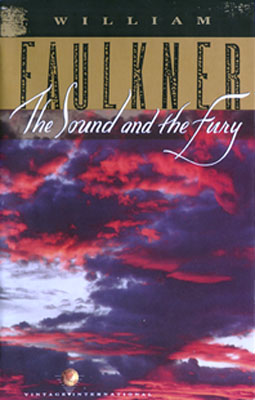
You're The Sound and the Fury!

by William Faulkner

Strong-willed but deeply confused, you are trying to come to grips
with a major crisis in your life. You can see many different perspectives on the issue, but you're mostly overwhelmed with despair at what you've lost. People often have a hard time understanding you, but they have some vague sense that you must be brilliant anyway. Ultimately, you signify nothing.


Take the Book Quiz
at the Blue Pyramid.


I Signify Nothing. Yeah, that's about right.


You're an Octopus!

Thoughtful and reflective, you always appear to have tilted your
head slightly to one side. You like stretching out your languorous body wherever
you can, but not everything is always relaxed. You wear your emotions on your
sleeve and have a terrible poker face. And when you feel most threatened, you start
writing things down furiously. If there's a sucker born every minute, there's one
of you born roughly every day.


Take the Animal Quiz
at the Blue Pyramid.


I do tilt my head to one side, but I'm going for the "inquisitive puppy" look, not the "blubbery octopus" look.


You're Connecticut!

You have a great deal to do with whales and, when an observer squints,
even look a little like one. Even though you don't play hockey anymore, you've got an
icy personality and prefer social climbing to most other activities. If you live in a
small town, you're absurdly wealthy, and if you live in a big city, you're probably
stuck in a dead-end factory job. For some reason, you call cities "fords".
GM can't be pleased about that.


Take the State Quiz
at the Blue Pyramid.


A whale? I thought I was an octopus? Social climbing? Only up the ivory towers....

Know thyself: Go to tickle.com